Cairo's Education Race: How the Capital Stacks Up Against Global Peers
As universities across the Middle East and beyond modernise their facilities and curriculum, Cairo's institutions are charting their own path—with mixed results.
As universities across the Middle East and beyond modernise their facilities and curriculum, Cairo's institutions are charting their own path—with mixed results.
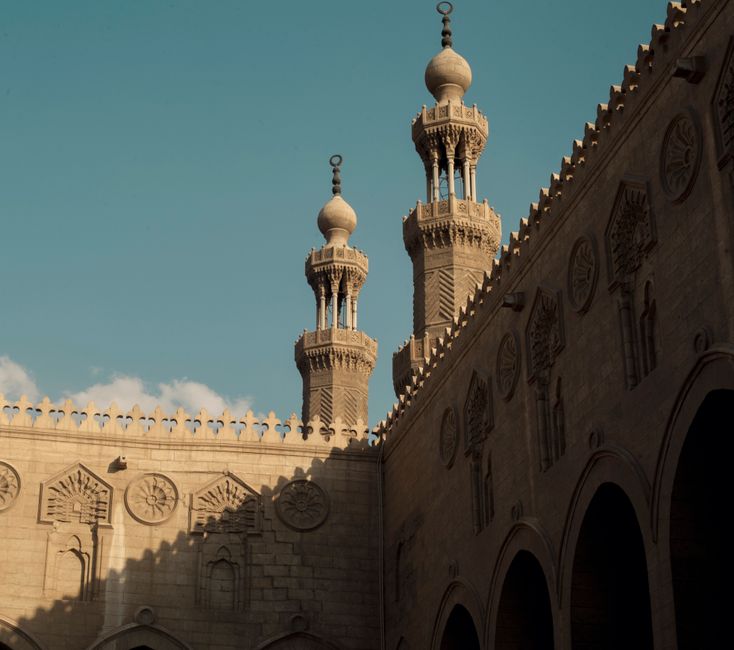
Cairo's education sector faces a critical juncture. While the city remains home to Africa's oldest university—Al-Azhar, founded in 970 CE—the capital is now grappling with how to compete with rapidly modernising institutions in Dubai, Istanbul, and Beirut, even as it tackles chronic infrastructure challenges.
The American University in Cairo (AUC), perched in New Cairo's leafy neighbourhoods, has long positioned itself as the region's premier English-language institution. With tuition fees exceeding 200,000 Egyptian pounds annually for undergraduate programmes, it attracts Egypt's elite and international students. Yet even AUC's administration acknowledges the pressure from Gulf competitors offering comparable curricula at lower costs, combined with significant state subsidies.
Meanwhile, Cairo University—the state-funded flagship on Giza Street—educates over 120,000 students across its sprawling campus, yet struggles with outdated laboratory equipment and limited library resources compared to counterparts in Damascus before its decline, or current leaders like King Abdullah University of Science and Technology in Saudi Arabia. A recent assessment by regional education analysts noted Cairo University's engineering programmes still rely on 15-year-old machinery in some departments.
The disparity extends to the school level. International schools clustered around Maadi and Zamalek—including prestigious institutions charging 400,000-600,000 pounds annually—offer cutting-edge facilities and advanced placement curricula that mirror Western standards. By contrast, public schools across Garden City and Helwan serve hundreds of students per classroom, with teacher-to-pupil ratios exceeding international benchmarks by a factor of three.
Recent government initiatives show movement. The New Administrative Capital's newly inaugurated schools are equipped with smart classrooms and robotics labs. Yet critics note this concentration of resources mirrors a pattern seen in competitor cities: premium education for wealthy districts while peripheral zones lag significantly.
What sets Cairo apart is its sheer scale. No Middle Eastern rival educates as many students across such economic disparities. Istanbul's education system benefits from Turkey's distributed prosperity; Beirut's universities serve a smaller, more homogenous population. Cairo must bridge gaps that span continents of development within a single metropolitan area.
Education experts suggest Cairo's advantage lies not in matching Dubai's facilities or Istanbul's efficiency, but in leveraging its institutional heritage and intellectual capital. Al-Azhar's global influence and AUC's research credentials remain unmatched regionally. The challenge: ensuring that advantage extends beyond privileged neighbourhoods into the crowded quarters where most Cairenes actually live.
This article was compiled by AI and screened before publishing. See our editorial standards.
How does this story make you feel?
Spread the word
About this article
Published by The Daily Cairo
Daily brief
Free, in your inbox before 7am. Weekdays.
More in News