Why Cairo's Neighbourhoods Defy Every Global City Blueprint
From Zamalek's island insularity to Garden City's colonial whispers, Cairo's communities operate on a logic entirely their own.
From Zamalek's island insularity to Garden City's colonial whispers, Cairo's communities operate on a logic entirely their own.
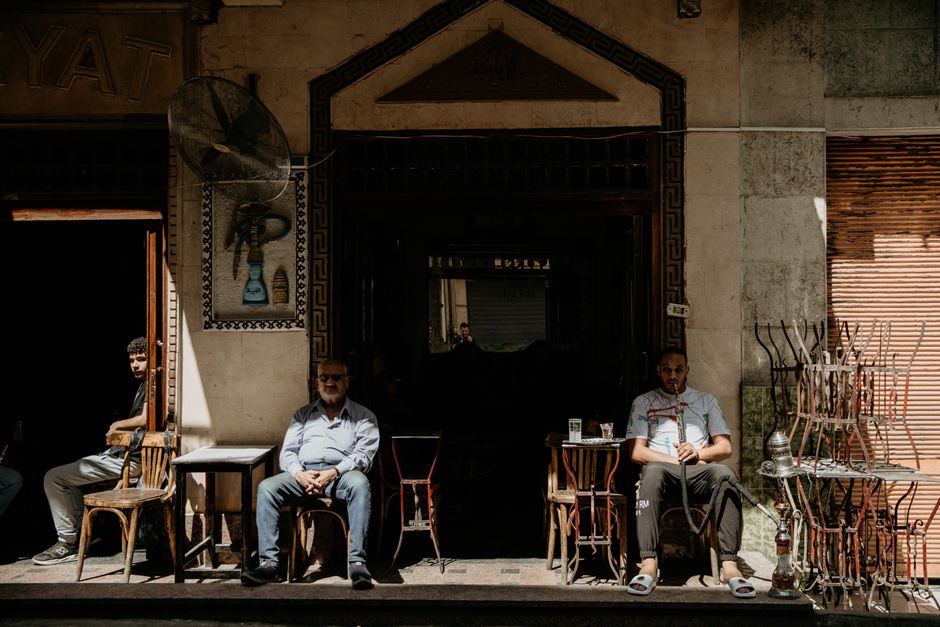
Walk through Garden City on a Thursday evening and you'll witness something most global metropolises have abandoned: an entire neighbourhood still organised around human rhythm rather than convenience. The tree-lined streets off Sharia Kasr El Aini move at a pace that would baffle residents of Manhattan or Singapore. Street vendors set up permanent fixtures outside apartment buildings. Neighbours actually know each other's names. This isn't quaint nostalgia—it's how Cairo's 21 million residents have managed to maintain genuine community in an era when most cities have outsourced belonging to apps and algorithms.
What makes Cairo fundamentally different from London, Dubai, or São Paulo isn't just its history, though that matters. It's the persistence of old spatial logic within new urban density. Take Zamalek, the island neighbourhood that functions almost as a city-state within the metropolis. Property prices here rival Manhattan's per-square-metre rates—currently hovering around 4,500 EGP ($90 USD) for a modest apartment rental. Yet the neighbourhood maintains a deliberately insular character, with its own schools, markets, and social ecosystem that relatively few outsiders penetrate. Compare that to Dubai's obsessive integration of global citizens, or London's constant neighbourhood reinvention, and you see Cairo's resistance to homogenisation.
The real distinction emerges in how Cairo's communities are fundamentally intergenerational. While Western cities have watched young professionals displace long-term residents through gentrification, Cairo's middle-class neighbourhoods like Heliopolis still function as extended family clusters. Three generations occupy the same street. This creates a social stability that urban planners in Singapore and Copenhagen spend millions trying to engineer.
Then there's the economic reality. A middle-class family in Mohandiseen—Cairo's professional heartland—can maintain a lifestyle with domestic help, regular dining out, and private school fees on a household income that would barely cover rent in most developed cities. This isn't extracted from lower wages alone; it reflects a fundamentally different social contract between labour, community, and cost of living that globalised cities have largely abandoned.
The flip side is real: Cairo's informal infrastructure, waste management challenges, and traffic chaos are equally unique—consequences of rapid growth outpacing formal systems. Yet these struggles have forged communities with genuine interdependence. When electricity cuts happen—still occasional in summer—entire streets coordinate, share resources, check on elderly neighbours. That social capital is nearly extinct elsewhere.
Cairo's neighbourhoods remind us that global city life doesn't follow a universal template. Some distinctiveness survives not through nostalgia tourism or heritage preservation, but through sheer demographic and economic weight that prevents total assimilation into the international urban prototype.
This article was compiled by AI and screened before publishing. See our editorial standards.
How does this story make you feel?
Spread the word
About this article
Published by The Daily Cairo
Daily brief
Free, in your inbox before 7am. Weekdays.
More in lifestyle