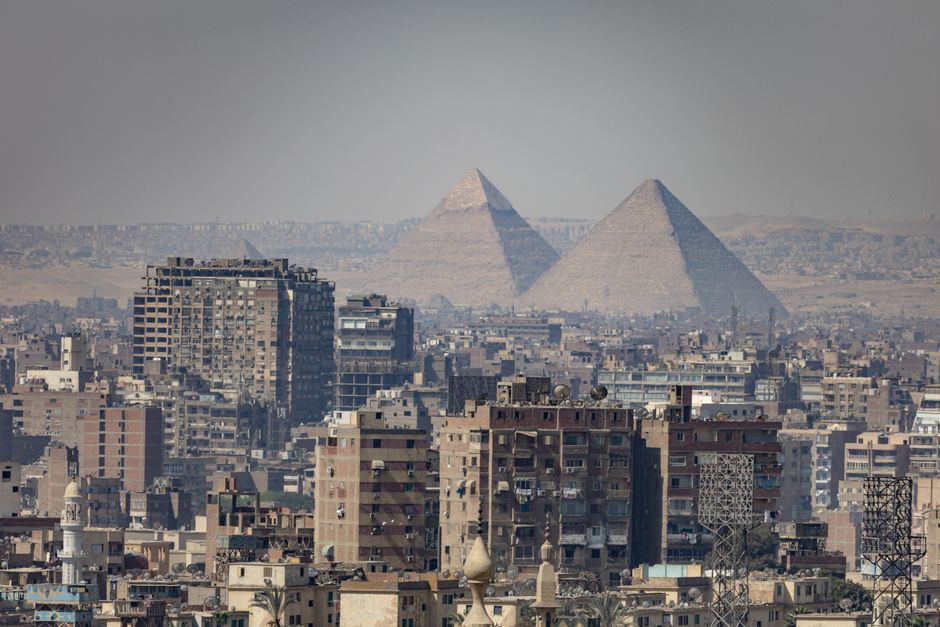
Walk into any co-working space along Mohamed Naguib Street in Downtown Cairo, and you'll hear a familiar refrain: "We're not trying to be the next Silicon Valley." That's precisely why Cairo's artificial intelligence ecosystem is becoming impossible to ignore. While global tech giants chase unicorn valuations in San Francisco, Cairo-based AI firms are quietly capturing markets across Africa, the Middle East, and South Asia—solving problems at a scale and price point that American companies simply cannot match.
The numbers tell the story. According to recent analysis from Egypt's Ministry of Communications and Technology, AI-focused startups in Cairo grew 34 percent year-on-year through 2025, with an average Series A funding round of $2.1 million—roughly one-third what comparable US startups command. Yet these companies aren't scrappier because they're inferior; they're more efficient because they operate under fundamentally different constraints and opportunities.
Consider language. While Silicon Valley treats Arabic as a niche afterthought, Cairo startups have built entire business models around natural language processing for Arabic dialects—Egyptian, Levantine, Gulf Arabic—that serve over 400 million native speakers. Companies clustered around the American University in Cairo's tech corridor have pioneered AI systems that understand colloquial Arabic better than Google's, opening doors in healthcare, education, and financial services where Western NLP tools simply fail.
Then there's cost structure. A mid-level AI engineer in Downtown Cairo earns roughly $18,000 annually, compared to $160,000 in San Francisco. This isn't exploitation; it's arbitrage that allows Cairo startups to hire deeper teams, experiment more freely, and iterate faster. A Cairo-based fintech startup can deploy an AI credit-scoring model for 100,000 unbanked Egyptians for less than a Silicon Valley firm spends on office snacks in a quarter.
The real secret, though, is cultural. Cairo's tech community understands instinctively what Western companies spend millions learning: that markets in Africa and Asia don't want mirror images of American solutions. They want tools built for offline-first contexts, for low-bandwidth infrastructure, for payment systems that don't assume a working credit card industry. Cairo startups aren't constrained by these realities—they're fluent in them.
By 2026, observers expect Cairo to account for nearly 8 percent of Africa's AI talent pool, rivaling Lagos and Johannesburg. The city isn't competing with Silicon Valley. It's building something different, faster, and increasingly, better.
This article was compiled by AI and screened before publishing. See our editorial standards.