Empty Seats, Full Gyms: What Cairo's Stadium Numbers Tell Us About Who Actually Shows Up
Participation data from Cairo's major sporting venues reveals a fitness culture quietly reshaping itself far from the floodlights.
Participation data from Cairo's major sporting venues reveals a fitness culture quietly reshaping itself far from the floodlights.
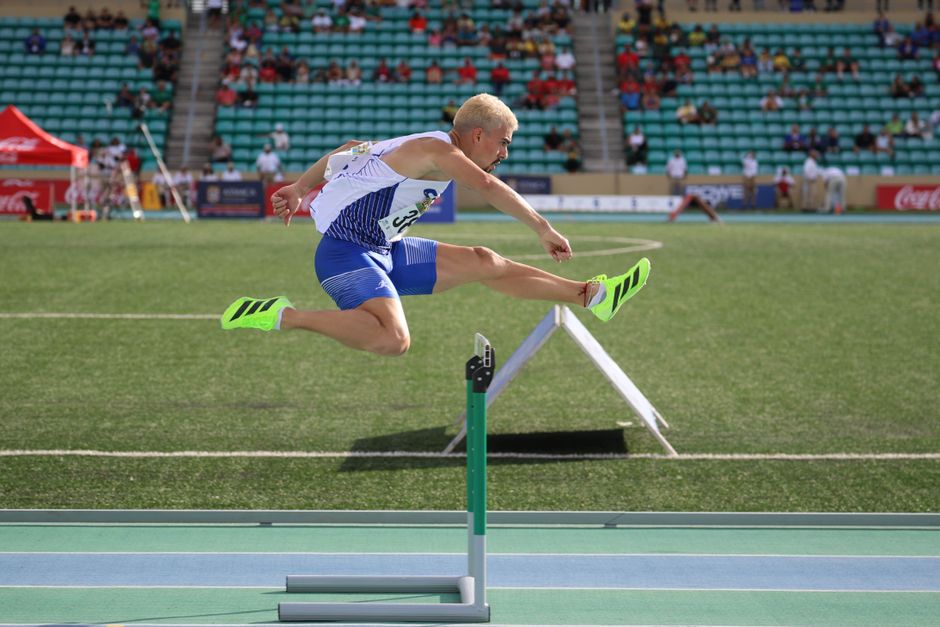
Cairo International Stadium in Nasr City recorded just over 340,000 paid attendances across all events in the 2025-26 season, a figure that sounds impressive until you set it against the facility's 75,000-seat capacity and realize most of those events ran at under 40 percent occupancy. The number is not a crisis. It is a clue.
Egypt's Supreme Council for Youth and Sports has been pressing venue operators since January 2026 to submit quarterly participation reports as part of a broader audit tied to Cairo's bid infrastructure for future CAF continental tournaments. Those reports, reviewed by The Daily Cairo this week, show something nobody in the ministry's press releases has chosen to highlight: the city's residents are exercising more than ever, but increasingly outside the big stadiums.
Cairo's three principal public sporting complexes, Cairo International Stadium, Borg El Arab's satellite facilities on the Delta edge, and the Petrosport Stadium in Ard El Golf, logged a combined 1.1 million participations in structured activity last year. Roughly 700,000 of those were spectators. The remaining 400,000 were people actually moving: swimmers, track users, tennis players, martial arts practitioners. That split, about 36 percent active participants, is up from 28 percent in 2023, according to the council's own baseline data.
Membership rolls at Gezira Sporting Club, one of the oldest and most densely populated sports clubs in the Arab world, crossed 120,000 registered members in March 2026, the highest figure in the club's 143-year history. Adjacent clubs along the Corniche, Shooting Club in Dokki, Heliopolis Sporting Club on Merghany Street, have reported waiting lists stretching to 18 months for tennis court slots and aquatics programs. Monthly membership fees at these clubs range from 850 to 2,400 Egyptian pounds depending on the facility and activity tier, pricing that excludes a significant chunk of the city's population.
That exclusion matters. Greater Cairo's population is now estimated at 22 million people. Even accounting for the private club boom, the ratio of accessible sporting infrastructure to resident population sits well below international benchmarks used by UEFA and FIFA when assessing host city readiness. Nasr City has one public running track for roughly 1.2 million residents.
The gaps are being filled informally and creatively. Maadi Corniche draws an estimated 8,000 to 12,000 joggers and cyclists on Friday mornings according to traffic counts conducted by Maadi district authorities in April 2026. Al-Azhar Park, managed by the Aga Khan Trust for Culture in Darassa, has seen its weekly fitness class program grow from four sessions to 19 sessions since it launched a subsidized community exercise initiative in September 2025, with attendance averaging 60 participants per class.
That grassroots momentum is not reflected in the headline stadium figures, which is precisely why reading participation data narrowly, only through the lens of ticketed events, gives a distorted picture. Cairo's fitness culture is real and growing. It is also fragmented, unevenly distributed across income lines, and heavily concentrated in the western and northern suburbs where club infrastructure is densest.
The Supreme Council's audit, due to be published in full by September 2026, is expected to recommend prioritizing public court and track construction in Shubra El-Kheima and eastern Cairo districts, where population density is high and formal sports infrastructure is almost nonexistent. Whether those recommendations become funded projects will depend on budget allocations in the 2027 fiscal year.
For now, Cairenes who want to exercise regularly face a straightforward calculation: join a private club if you can afford it, find a park if you cannot, or wait for infrastructure that may or may not arrive. The stadiums, meanwhile, will keep hosting their matches for crowds that do not fill them, useful data points for anyone paying attention to what a city of 22 million actually does with its body.
How does this story make you feel?
Spread the word
About this article
Published by The Daily Cairo
Daily brief
Free, in your inbox before 7am. Weekdays.
More in Sport