What Cairo's Auction Block Is Telling Us About Affordable Housing
Recent property sales data and clearance rates reveal a widening gap between supply and demand—and what policymakers must do next.
Recent property sales data and clearance rates reveal a widening gap between supply and demand—and what policymakers must do next.
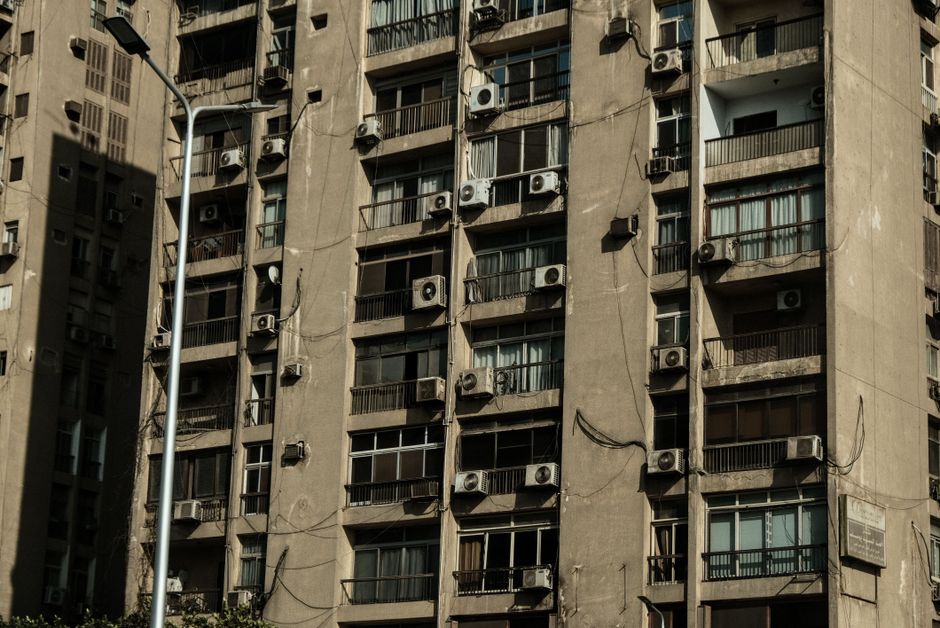
Cairo's property auction circuit is sending a blunt signal: affordable housing remains a crisis in motion.
Over the past eighteen months, court-ordered property auctions across Giza and Cairo governorates have seen clearance rates hover stubbornly below 40%, even as headline prices for premium units in Zamalek and New Cairo continue climbing. A modest two-bedroom apartment in Helwan recently fetched EGP 1.2m at auction—a fraction of comparable Maadi listings—yet even these bargain-basement auctions struggle to find buyers. The message is clear: Cairo's housing market is fractured, and price alone cannot bridge the chasm.
The government's stated target of EGP 80,000 per square metre as an average citywide figure masks a more troubling reality. Properties in New Administrative Capital developments command premiums upwards of EGP 120,000/sqm, while informal settlements and older stock in Zamalek West and Rod El-Farag languish unsold despite hitting reserve prices. This divergence suggests that traditional supply-side interventions—land clearance, zoning reform, developer incentives—are reaching their limits.
What the auction data actually reveals is a demand problem masquerading as a supply shortage. Cairo's expanding workforce lacks purchasing power, not housing units. Young professionals and young families with household incomes between EGP 3,000 and EGP 8,000 monthly cannot access mortgages for properties at or above the EGP 80k/sqm baseline. Meanwhile, institutional investors and overseas wealth continue hoarding premium stock, leaving middle-income buyers stranded.
The failed 'Home for a Home' initiative targeting vulnerable overseas families underscored a deeper policy gap: without meaningful subsidies, rent controls, or public-private financing mechanisms, proclamations of affordability ring hollow. Cairo's auction results are a ledger of that failure—each unsold property a testimony to misaligned policy.
Forward-looking observers note that emerging satellite cities like the New Administrative Capital may inadvertently worsen central Cairo's affordability crisis by siphoning high-net-worth purchasers northward, leaving older neighbourhoods—from Dokki to Shubra—trapped in a downward spiral of neglect and stagnation.
The next phase of Cairo's housing policy must confront what the auction block is already saying: price discovery alone will not solve affordability. Without direct intervention through social housing bonds, employer-linked schemes, or rent-to-own programmes administered by municipal bodies, the clearance rates will continue to languish, and the city's housing crisis will deepen.
This article was compiled by AI and screened before publishing. See our editorial standards.
How does this story make you feel?
Spread the word
About this article
Published by The Daily Cairo
Daily brief
Free, in your inbox before 7am. Weekdays.
More in Property