Cairo's Digital Archives Are Drowning in Duplicate Images — and the Fix Is Slower Than in Riyadh or Lagos
As municipalities worldwide automate the detection and removal of redundant digital assets, Egypt's capital is still largely doing it by hand.
As municipalities worldwide automate the detection and removal of redundant digital assets, Egypt's capital is still largely doing it by hand.
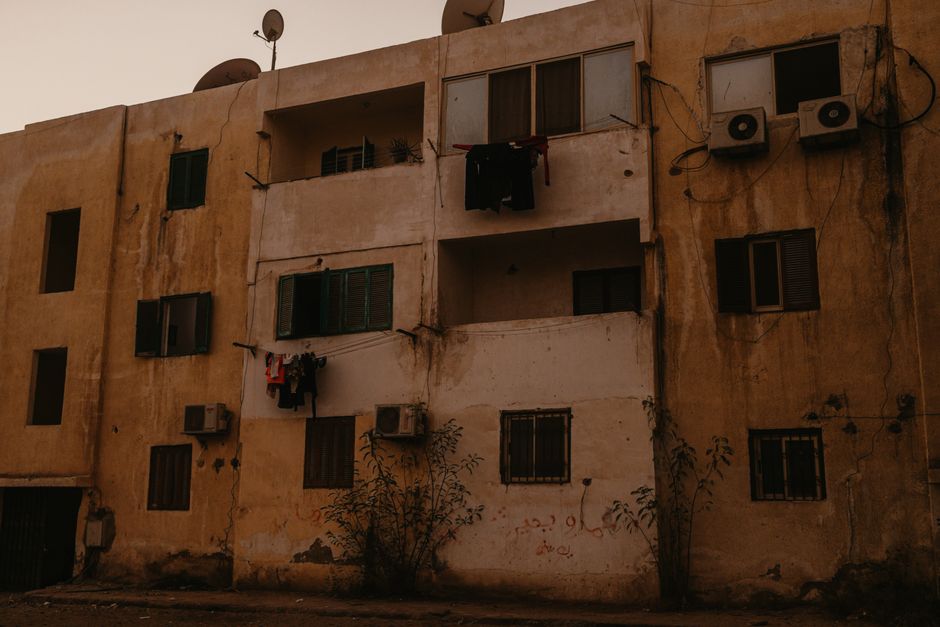
Cairo's largest municipal digital repository, managed under the Cairo Governorate's e-Government Services directorate, holds an estimated several million scanned documents, cadastral photographs, and public-infrastructure images accumulated since digitisation efforts began in earnest around 2011. A significant portion of that archive, according to internal assessments cited in a 2025 governorate modernisation report, consists of duplicate or near-duplicate files — the same permit photo uploaded three times, the same street-damage image filed under two different district codes. No automated deduplication system is currently running at scale.
The problem matters right now for a specific reason: Egypt's ongoing IMF loan programme has tied tranches of financing to measurable progress on administrative modernisation, including digitising land records at the New Administrative Capital and streamlining property documentation across Greater Cairo. Redundant image files are not a cosmetic nuisance. They inflate storage costs, slow retrieval times for civil servants processing subsidy applications and building permits, and create legal ambiguities when two versions of the same cadastral photograph carry different metadata. With the Egyptian pound still under pressure following successive devaluations, every unnecessary gigabyte of cloud storage has a direct cost in hard currency.
The Mogamma building on Tahrir Square processes tens of thousands of citizen requests monthly. Staff there, along with colleagues at the Giza Civil Registry office on Gamal Abd El-Nasser Street, flag duplicate files manually during routine document verification — a workflow that digitisation consultants have described in regional forums as unsustainable at the volume Cairo generates. The Egyptian Information Technology Industry Development Agency, known as ITIDA, has piloted AI-assisted document processing tools in limited contexts, but a city-wide image deduplication programme has not been publicly announced or budgeted as a standalone initiative.
Compare that to what Riyadh has done. Saudi Arabia's Smart Dubai-modelled municipal digitisation drive, accelerated under Vision 2030, deployed perceptual hashing tools across government image databases starting in 2023, with the Riyadh Municipality publicly reporting a reduction in storage overhead as a direct result. Lagos, through its Lagos State Ministry of Economic Planning and Budget, contracted a local technology firm in 2024 to audit its land-registry image database and remove redundant files ahead of a World Bank-backed urban reform project. Both cities had a concrete institutional mandate and a named budget line. Cairo has neither, at least not publicly.
Cloud storage is not cheap when purchased in dollars. Egyptian government agencies operating on pound-denominated budgets and paying for AWS or Microsoft Azure capacity in foreign currency face a real fiscal drag from unnecessary data volume. A 2024 pricing benchmark published by Microsoft showed Azure Blob Storage in the Middle East North Africa region running at roughly $0.018 per gigabyte per month for the first 50 terabytes — modest per unit, but significant at the scale a city of 22 million generates. Duplicate images that could be eliminated through automated hashing compound that cost month after month.
There is also the question of the New Administrative Capital. The Administrative Capital for Urban Development company, which oversees construction and infrastructure records for the new city east of Cairo, is building its digital registry from scratch and has an opportunity to enforce deduplication from day one. Whether it will adopt that standard before the archive grows unwieldy is an open question that officials from the company have not addressed in public statements reviewed by The Daily Cairo.
For civil servants and citizens, the practical impact is friction. A property owner in Heliopolis trying to clear a title dispute may find that two scanned images of the same survey document exist in the system with contradictory stamps, requiring a physical visit to resolve what should be a five-minute database check. Until Cairo's governorate either funds an ITIDA-led deduplication project or mandates that district offices use open-source tools — several are available at no cost under MIT licences — that friction will persist. The cities that have moved fastest on this are the ones that treated it as infrastructure, not housekeeping.
How does this story make you feel?
Spread the word
About this article
Published by The Daily Cairo
Daily brief
Free, in your inbox before 7am. Weekdays.
More in News
