Cairo Government Digital Archives: Duplicate Image Crisis
Cairo's ministries face massive redundant data costs during New Administrative Capital migration. See how duplicate files are consuming budgets and archival storage.
Cairo's ministries face massive redundant data costs during New Administrative Capital migration. See how duplicate files are consuming budgets and archival storage.
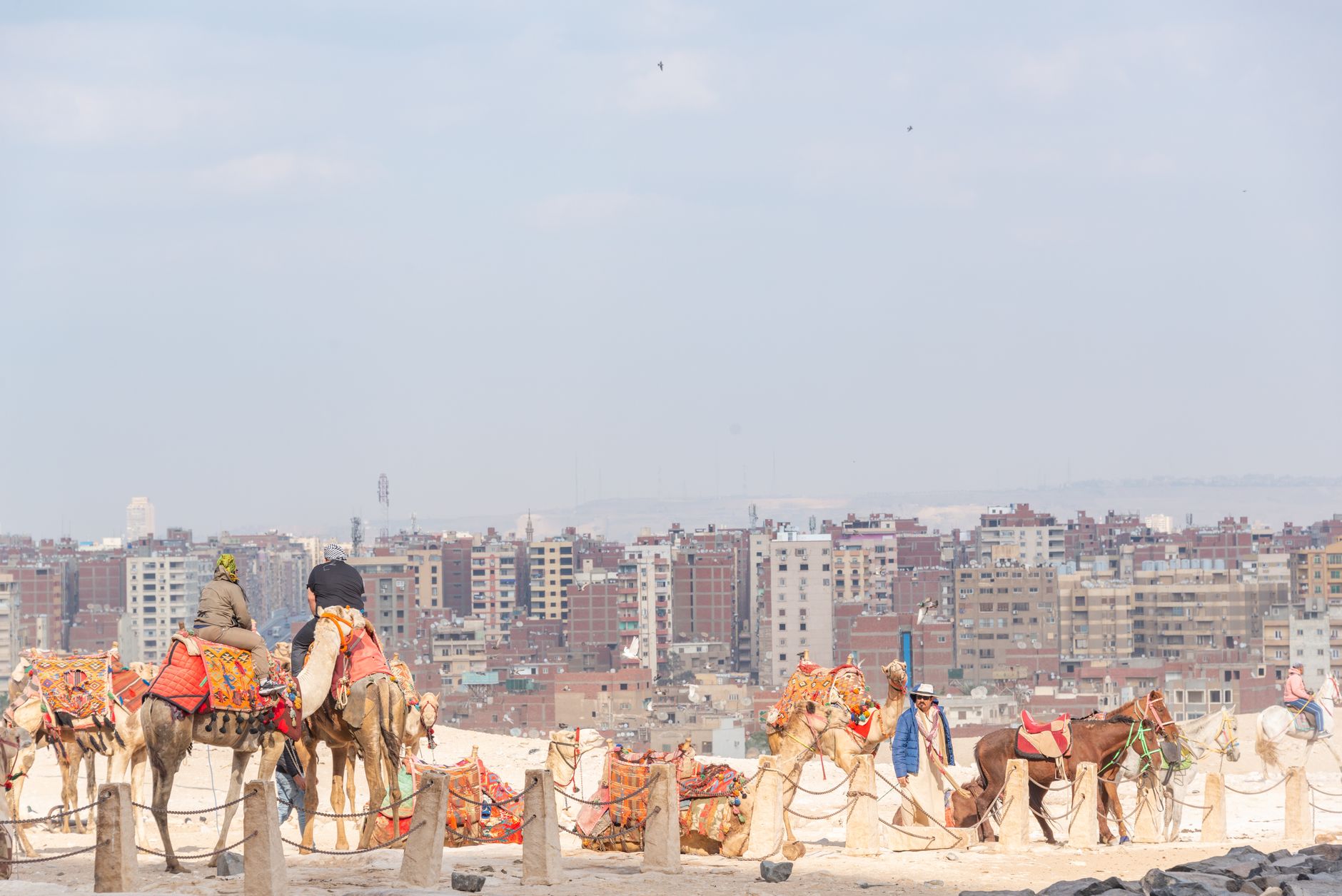
Egyptian public institutions hold an estimated tens of millions of digitised photographs, scanned documents and heritage images across their combined server infrastructure — and a growing share of that storage is occupied by exact or near-exact duplicates. The problem is not abstract. Every redundant file consumes real budget, slows retrieval systems and, in the worst cases, pushes genuinely irreplaceable archival material off underfunded servers entirely.
The timing matters because Egypt is mid-stride through an expensive digital transformation push tied directly to the New Administrative Capital project east of Cairo, where dozens of ministries have relocated their headquarters since 2023. The migration of legacy data from older government buildings in downtown Cairo and Nasr City to new data centres in the capital's Government District created precisely the conditions under which duplicate files multiply: rushed transfers, inconsistent naming conventions and multiple departments copying the same base assets without coordination.
Industry benchmarks from enterprise storage audits in comparable middle-income economies suggest that poorly managed institutional archives can carry duplicate-content rates of between 25 and 40 percent of total stored data. Apply even the lower end of that range to Egypt's public sector — which the Ministry of Communications and Information Technology has described in planning documents as targeting 100 petabytes of government cloud capacity by the end of 2026 — and the redundant storage problem becomes a line item, not a footnote.
Within Cairo specifically, two institutions illustrate the scale. The Egyptian Museum on Tahrir Square holds the world's largest collection of Pharaonic antiquities, and its digitisation programme — accelerated after the opening of the Grand Egyptian Museum at Giza in November 2023 — has produced high-resolution image archives now distributed across at least three separate internal systems. Separately, the Egyptian Tourism Promotion Board, headquartered in Heliopolis, manages a centralised image library used by travel agencies, foreign press offices and online platforms. Staff at institutions like these routinely work with multiple versions of the same asset: original scans, compressed exports, watermarked copies and social-media crops, each stored as a discrete file.
Cloud storage pricing in Egypt's government procurement framework has been pegged in recent contracts at rates broadly consistent with regional providers, where one terabyte of managed cloud storage costs roughly $20 to $35 per month depending on redundancy tiers. At those rates, even a single unnecessary petabyte of duplicated data represents between $240,000 and $420,000 in annual expenditure that delivers zero informational value. For institutions operating under the fiscal constraints imposed by Egypt's ongoing IMF loan programme — which has required the government to reduce its overall deficit — that is a figure procurement officers can no longer ignore.
Automated deduplication software has existed for years, but adoption across Egyptian public institutions has been uneven. The approach uses hash-matching algorithms to identify files with identical or near-identical pixel data regardless of filename, and in mature deployments it routinely recovers 20 to 35 percent of used storage capacity within months of deployment. The technology itself is not expensive — open-source tools capable of processing large heritage image libraries are freely available, and commercial platforms used by large regional broadcasters such as those based in Dubai and Doha cost a fraction of what the redundant storage consumes annually.
The practical obstacles are administrative rather than technical. Many Cairo institutions store images across departmental silos that do not share a common file management system, meaning a deduplication pass on one ministry's servers leaves identical files untouched on a neighbouring department's infrastructure. The New Administrative Capital's Government District was intended partly to resolve this fragmentation through shared infrastructure, but the migration is ongoing and the old Nasr City and Dokki-based systems remain live in many cases.
For institutions looking to act before the end of Egypt's 2026 fiscal year on June 30, the priority step is a storage audit rather than an immediate software purchase. Map what exists, where it lives and who owns it. The deduplication numbers only become useful once the full inventory is known — and right now, across much of Cairo's public digital estate, that inventory does not yet exist.
How does this story make you feel?
Spread the word
About this article
Published by The Daily Cairo
Daily brief
Free, in your inbox before 7am. Weekdays.
More in News
