From Coffeehouse Politics to Digital Galleries: How Cairo's Cultural Scene Reinvented Itself
Tracing five decades of transformation in Downtown Cairo's creative heart reveals how a city's identity survives—and thrives—through constant evolution.
Tracing five decades of transformation in Downtown Cairo's creative heart reveals how a city's identity survives—and thrives—through constant evolution.
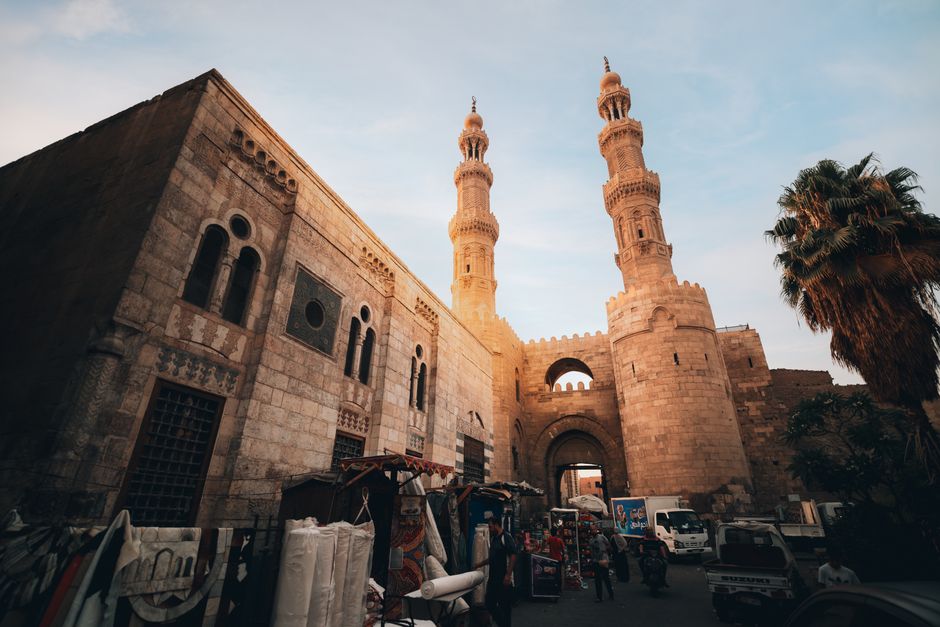
Walk down Talaat Harb Street today and you'll find sleek concept cafés sharing pavement space with century-old ahwas, their marble tabletops still bearing the coffee rings of generations. This isn't contradiction—it's Cairo's cultural DNA, a living archive of how one of the world's greatest cities has perpetually reinvented itself while refusing to forget.
The 1970s and 80s saw Downtown emerge as the undisputed epicenter of Egyptian intellectual life. Artists, writers, and musicians congregated in legendary venues like the Horreyya Theatre and Zamalek's cultural clubs, where Umm Kulthum's influence still echoed through heated debates about modernity and tradition. The Townhouse Gallery, established in the 1990s in a restored palazzo near Bab al-Louk, became the first independent contemporary art space—a watershed moment that legitimized avant-garde practice in a city traditionally anchored to classical forms.
The turn of the millennium brought seismic shifts. As wealth migration pushed elite culture toward New Cairo and Heliopolis, Downtown faced decay. Yet this apparent crisis catalyzed something remarkable: grassroots cultural resistance. The 2000s witnessed an explosion of artist-run initiatives—makeshift studios in crumbling nineteenth-century buildings, underground theater collectives, independent film societies screening works banned from official channels. The average rent for a studio space in Downtown dropped to just 500 Egyptian pounds monthly, creating unprecedented accessibility for emerging creators.
The 2011 revolution crystallized Downtown's symbolic reclamation. Tahrir Square became the literal center of a nation reimagining itself, and the surrounding neighborhoods transformed into open-air galleries. Street art colonized every available wall; protest songs became the soundtrack of cultural resistance. Organizations like Darb 1718, established in the post-revolution period, formalized this energy by turning historic alleyways into permanent art spaces where 15,000 visitors annually encounter everything from calligraphy installations to multimedia performances.
Today's Cairo cultural scene bears all these layers simultaneously. The newly renovated Citadel now hosts the Museum of Islamic Art alongside contemporary installations. The AUC's new Downtown campus anchors academic rigor to street-level energy. Digital platforms—Instagram feeds documenting heritage buildings, TikTok creators contextualizing pharaonic history—have democratized cultural authority in ways unimaginable a decade ago.
What distinguishes Cairo's evolution from purely nostalgic preservation is its insistence that memory and innovation aren't adversaries. Each era hasn't erased its predecessor; instead, cultural identity has accumulated like sediment in the Nile, creating fertile ground where a teenager can sample 1940s Um Kulthum while creating electronic music in a loft above a 400-year-old coffee shop.
That paradox—ancient and immediate, elite and grassroots, preserved and perpetually reinvented—remains Cairo's cultural signature.
This article was compiled by AI and screened before publishing. See our editorial standards.
How does this story make you feel?
Spread the word
About this article
Published by The Daily Cairo
Daily brief
Free, in your inbox before 7am. Weekdays.
More in culture