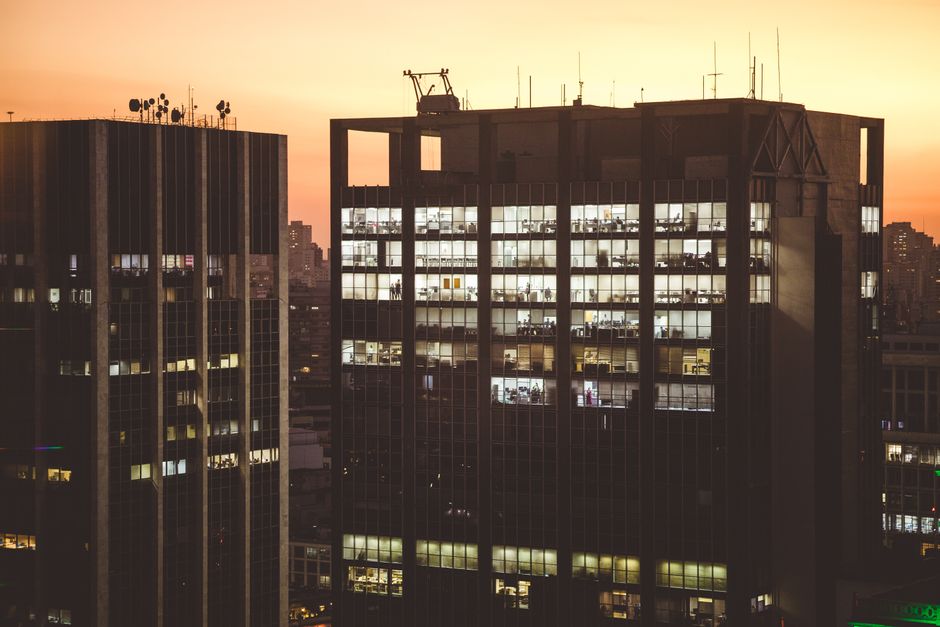
Global Turbulence Is Reshaping Cairo's Office Market — and Local Landlords Are Feeling It
From New Cairo's gleaming towers to Downtown's ageing stock, Egypt's commercial property sector is being squeezed by forces that stretch from Tehran to Warsaw.
From New Cairo's gleaming towers to Downtown's ageing stock, Egypt's commercial property sector is being squeezed by forces that stretch from Tehran to Warsaw.

Cairo's Grade-A office vacancy rate has climbed to roughly 22 percent in the first half of 2026, according to figures compiled by Coldwell Banker Egypt, as multinational tenants reassess their Middle East footprints against a backdrop of war, political upheaval and a European summer already recording catastrophic heat casualties. The number matters because it is the highest vacancy reading since 2020, and it is landing at the worst possible moment for landlords who borrowed heavily to build during the post-pandemic construction surge.
The timing is not coincidental. The death of Iran's Supreme Leader has injected fresh uncertainty into regional risk calculations. Multinationals with exposure across the Middle East and North Africa are pausing leasing decisions until they understand what a post-Khamenei Iran looks like for supply chains and security. That hesitation is showing up directly in the pipeline of deals along Cairo's two principal commercial corridors — the New Cairo axis running through the Fifth Settlement, and the older Sheikh Zayed cluster on the city's western edge.
Just eighteen months ago, prime asking rents in the Fifth Settlement — specifically around Teseen Street and the clusters surrounding Cairo Festival City — were touching 350 Egyptian pounds per square metre per month for shell-and-core space. Brokers active in the market say effective rents, after fit-out contributions and rent-free periods are factored in, are now closer to 280 pounds. That 20-percent effective discount reflects both the pound's partial recovery against the dollar following the IMF's $8 billion Extended Fund Facility tranches, and the oversupply problem that crept in when four large towers delivered simultaneously in late 2025.
The story is more complicated in older stock. Buildings along Corniche El Nil in Maadi and the heritage blocks around Talaat Harb Square in Downtown Cairo face a different squeeze: tenants who might once have accepted dated specifications are now demanding fibre infrastructure, backup generation rated for at least eight hours, and LEED-equivalent environmental credentials. Few of those older buildings can offer any of that without capital expenditure their owners cannot currently finance. The Egyptian Businessmen's Association flagged this bifurcation in a report circulated in May, warning that a two-tier market was hardening faster than anyone had anticipated.
European instability is adding another variable. Poland's government has publicly warned of critical months ahead as Russian military pressure intensifies, and the cascading effect on European corporate confidence is measurable. Several logistics and professional services firms that had earmarked Cairo as a regional hub — partly because of Egypt's proximity to European markets — have deferred expansion timelines into 2027. One German engineering consultancy that had signed heads of terms on roughly 1,800 square metres in the Katameya area quietly withdrew in April.
The uncertainty has handed leverage to tenants who are willing to commit. Lawyers active in commercial property transactions say well-capitalised Egyptian firms and Gulf-backed operators are extracting lease terms that would have been unthinkable two years ago: five-year deals with break clauses at year three, rent indexed to dollar rates rather than the pound, and fit-out contributions of up to six months' rent. The New Administrative Capital, where the government's own ministries have relocated and where Emaar Misr holds a significant development stake, is attracting different interest — largely from state-adjacent entities and banks required to maintain a government-district presence.
For smaller businesses, the practical calculus is straightforward: anyone whose lease expires before the end of 2026 is in a strong negotiating position and should use it. Landlords sitting on vacancies in Heliopolis, Nasr City, and the older New Cairo stock are hungry for tenants at almost any reasonable price. Those who wait until regional geopolitics stabilise — whenever that proves to be — will find the window has closed. Market cycles do not pause politely.
How does this story make you feel?
Spread the word
About this article
Published by The Daily Cairo
Daily brief
Free, in your inbox before 7am. Weekdays.
More in Business