Cairo's Food and Retail Sector: Reading the Economic Tea Leaves in Investment Flows
As international capital eyes Egypt's hospitality renaissance, local operators decode what shifting investment patterns reveal about the market's true health.
As international capital eyes Egypt's hospitality renaissance, local operators decode what shifting investment patterns reveal about the market's true health.
Cairo's retail and food sectors are sending mixed signals to investors monitoring economic health, with capital flows revealing a market in selective recovery rather than broad-based growth. Recent activity in districts like New Cairo, Zamalek, and Downtown suggests foreign investment remains concentrated in premium segments, even as middle-market operators face tighter conditions.
International hospitality chains expanded their Egyptian footprint during the first half of 2026, with three new upscale venues opening in New Cairo's commercial zones—a trend reflecting confidence among global brands. Yet this headline growth masks underlying challenges. Average table spend at mid-range restaurants along Qasr Al-Nile has remained flat year-on-year, hovering around 350-420 Egyptian pounds, while operational costs have risen approximately 8 percent due to energy and ingredient inflation.
The investment picture becomes clearer when examining capital sources. Gulf-based private equity maintains significant exposure to Cairo's hospitality sector, accounting for roughly 60 percent of announced projects. European investors, traditionally active in this market, have reduced new commitments—a pullback reflecting broader economic caution in their home markets rather than loss of confidence in Egypt specifically.
Local real estate data points to strategic repositioning. Premium retail space in Downtown Cairo commands rental rates between 150-200 pounds per square meter monthly, up 12 percent from last year, while secondary locations remain depressed. This divergence illustrates investor confidence remains highly selective, concentrating capital in established commercial hubs rather than emerging neighborhoods.
The Egyptian Hotels Association noted that average occupancy rates across Cairo's mid-range hotel segment reached 67 percent in May 2026, a modest improvement from 61 percent a year earlier. However, revenue-per-available-room metrics—a key indicator of pricing power—showed minimal growth, suggesting volume gains rather than margin expansion.
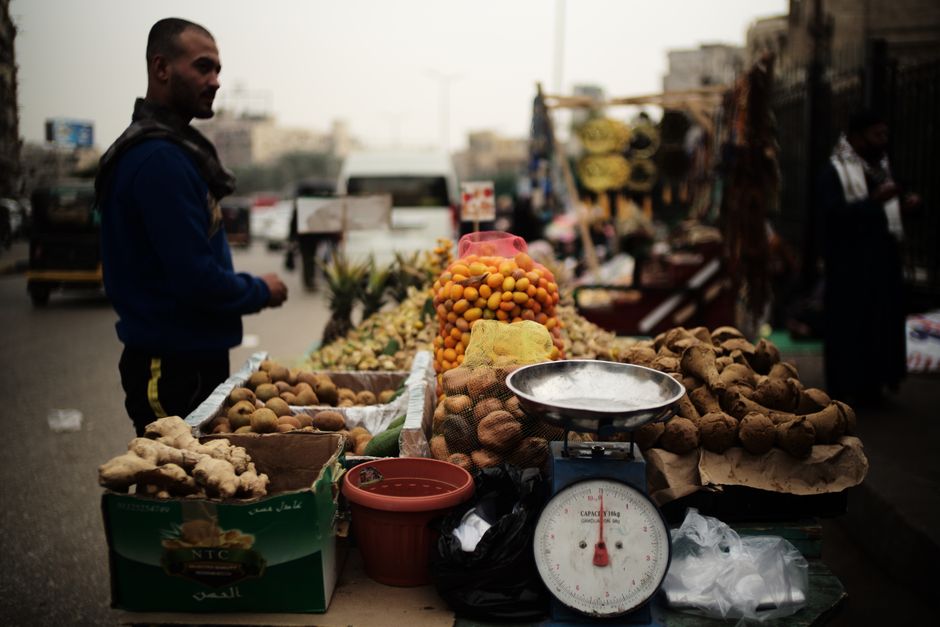
For restaurant operators, the data tells a cautionary tale about consumer behavior. Quick-service establishments in Heliopolis and Nasr City report stronger throughput, while sit-down dining experiences command premium pricing with lower customer frequency. This bifurcation reflects income pressures among traditional middle-class consumers, even as wealthy Cairo residents maintain spending patterns.
Analysts note that investment flows into Cairo's food and retail sectors increasingly correlate with currency stability and interest rate movements rather than local demand metrics alone. Foreign investors tracking the Egyptian pound's trajectory and central bank policy appear to be pricing in long-term potential rather than near-term returns, a posture that typically precedes broader market expansion—or correction.
This article was compiled by AI and screened before publishing. See our editorial standards.
How does this story make you feel?
Spread the word
About this article
Published by The Daily Cairo
Daily brief
Free, in your inbox before 7am. Weekdays.
More in Business